

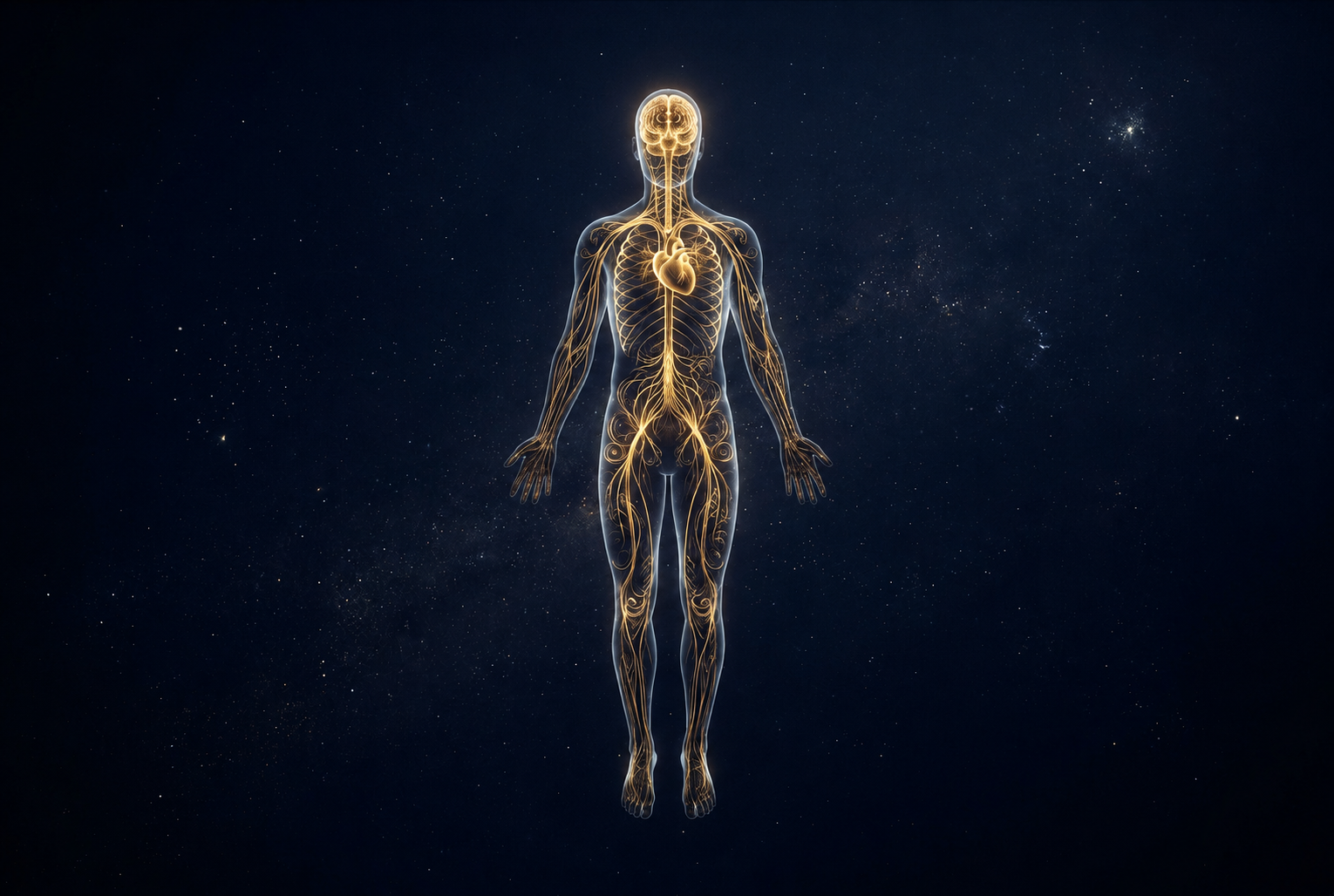
50 Amazing Facts About the Human Body You Never Knew
Somewhere behind your eyes, right now, roughly 86 billion neurons are firing in patterns more intricate than anything humanity has ever built. You didn’t have to switch it on. You didn’t have to learn how. It has been running, without interruption, since before you were born — and it will keep running, mostly unnoticed, for the rest of your life.
We spend so much energy looking outward for wonder — into deep space, into the ocean’s darkest trenches, into ancient ruins buried under centuries of sand — that we rarely stop to consider the strangest, most sophisticated object we’ll ever encounter: the one we’re living in. The human body is a 37-trillion-cell machine that repairs itself, defends itself, and somehow produces the very thought you’re having right now.
Here are 50 facts that reveal just how extraordinary — and how strange — that machine really is.
Your Brain: The Universe’s Most Complex Object
Start at the top, and you find the most baffling structure of all. Scientists have mapped galaxies, sequenced genomes, and split atoms, yet the three-pound organ inside your skull remains, in many ways, the final frontier.
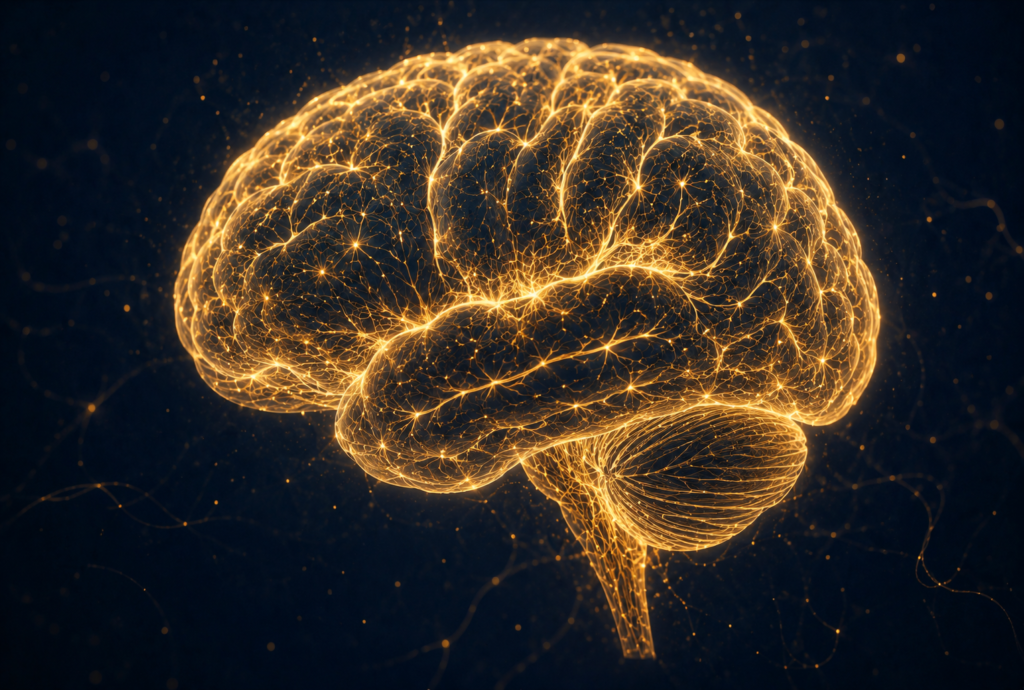
- Your brain holds around 86 billion neurons, each one wired to thousands of others — creating a web of possible connections that outnumbers the stars in the Milky Way.
- That web is hungry. Despite making up just 2% of your body weight, your brain burns through roughly 20% of your total energy supply, every single day.
- Strangest of all, the brain feels nothing. It has no pain receptors of its own, which is why neurosurgeons can operate on it while a patient is fully awake and talking.
- Thoughts move fast. Signals race along your neurons at speeds up to 268 miles per hour — quicker than a Formula 1 car at full throttle.
- There’s enough electrical activity in your brain right now to dimly power a small light bulb.
- Every memory you have isn’t stored in one tidy folder — it’s scattered across networks of neurons that reassemble each time you recall it, subtly rewriting the memory with every replay.
- Your brain is nearly three-quarters water, which is why even mild dehydration can quietly dull your focus and mood before you notice you’re thirsty.
- And contrary to what you may have heard, the brain doesn’t stop growing. It keeps producing new neurons throughout your life, especially in the hippocampus — the region responsible for forming new memories.
Your Heart and Circulatory System
If the brain is the body’s command center, the heart is its engine room — and it never once clocks out.
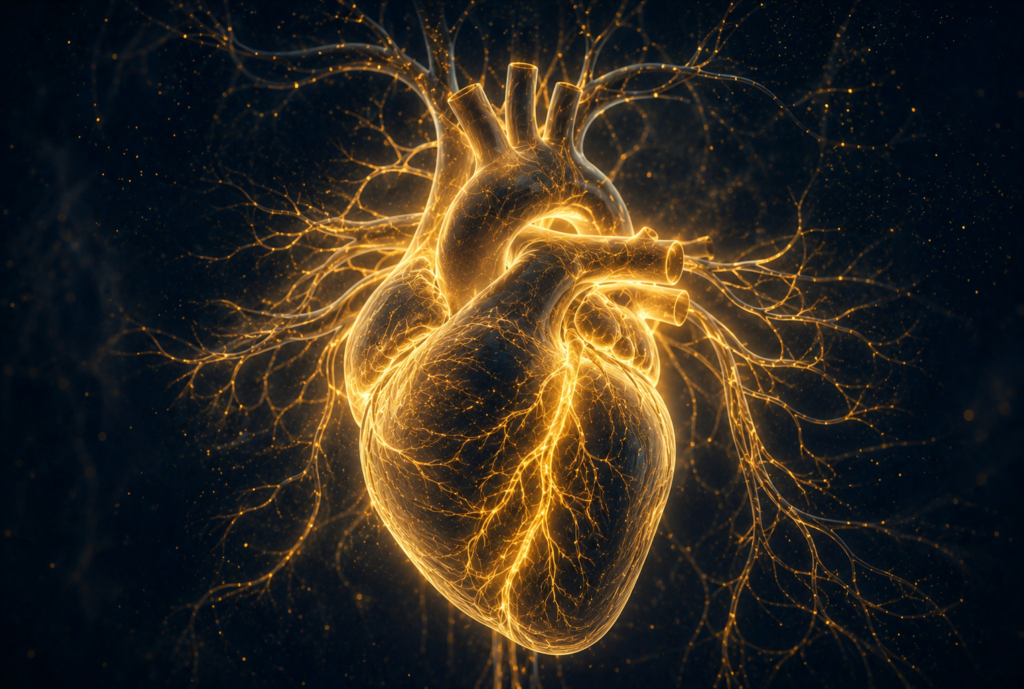
- It beats about 100,000 times a day, pushing nearly 2,000 gallons of blood through your body without ever pausing for a break.
- To do that, it relies on a transport network of staggering scale: laid end to end, your blood vessels would stretch roughly 60,000 miles — enough to wrap around the Earth more than twice.
- Blood moves fast, too. A single red blood cell completes an entire circuit of your body in about 20 seconds.
- Perhaps most astonishing: your heart doesn’t actually need your brain’s permission to beat. It has its own electrical system, and can keep contracting even if disconnected from the body, as long as it’s supplied with oxygen.
- All told, blood makes up about 8% of your total body weight — a river running constantly beneath your skin.
- And that steady “thump-thump” you hear when you press an ear to someone’s chest? That’s not the muscle contracting at all — it’s the sound of heart valves snapping shut.
Bones, Muscles, and Movement
Beneath the soft tissue is a framework engineered for both strength and constant renewal.
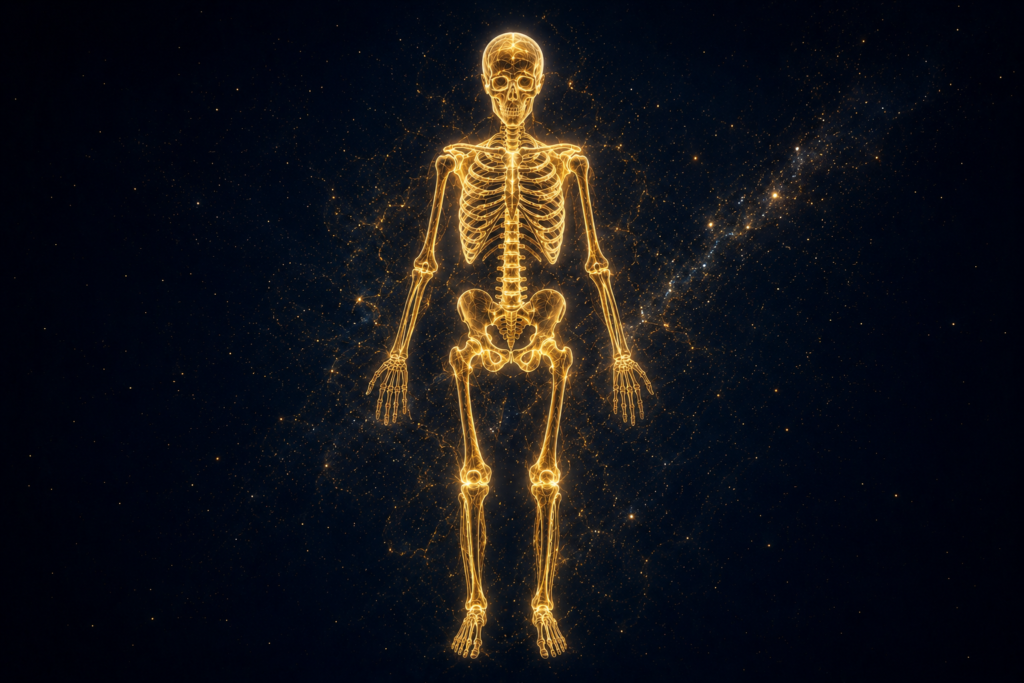
- You arrived in the world with about 300 bones, but many fused together as you grew, leaving adults with 206.
- Pound for pound, your femur — the thighbone — is stronger than concrete.
- Not every bone is built for strength, though. Your smallest, the stapes deep inside your ear, is barely the size of a grain of rice.
- Even your expressions are a feat of engineering: it takes around 17 muscles to smile, and roughly 43 to frown.
- The hardest-working muscle, relative to its size, is the masseter in your jaw — capable of clamping down with remarkable force when you bite.
- Your skeleton isn’t the fixed structure it feels like. Bone tissue is constantly broken down and rebuilt, meaning you effectively get a brand-new skeleton roughly every decade.
- Even something as small as a fingernail tells a story of biology in motion — nails on your dominant hand grow slightly faster than on the other, and fingernails outgrow toenails every time.
Skin, Hair, and the Body’s Outer Shell
Your body’s outer layer does more work than almost anyone gives it credit for.
- Skin is your largest organ by far, covering about 20 square feet and weighing in at roughly 8 pounds.
- It’s also constantly renewing itself — you shed around 500 million skin cells a day, and most of the dust drifting through your home is made up of what used to be you.
- Above that skin, roughly 5 million hair follicles are at work across your body, with about 100,000 crowded onto your scalp alone.
- Every strand is built from keratin — the same tough protein that forms your fingernails and, in other animals, their horns and claws.
- And when a cold breeze makes your arm hair stand up, you’re watching a survival reflex from ancestors with thicker fur, once used to trap heat or look larger to predators.
The Senses
Your senses are the body’s translators, converting raw physics into the experience of being alive.
- Your eyes can distinguish an estimated 10 million different colors — far more shades than any screen can display.
- Your nose may be even more impressive: recent research suggests the human sense of smell can detect over a trillion distinct scents.
- Your ears, meanwhile, never actually switch off, even in deep sleep — your brain simply learns to filter out sounds it decides are safe to ignore.
- Much of what you call “taste” is actually smell in disguise; block your nose, and even your favorite meal can turn strangely flat.
- Each eye also carries a blind spot, where the optic nerve punches through the retina — yet your brain fills the gap so seamlessly that you’ve never once noticed the hole in your own vision.
- Your fingertips carry some of the densest clusters of touch receptors anywhere on your body, sensitive enough to detect texture differences measured in nanometers.
Digestion and Internal Systems
Beneath the surface, an entire hidden ecosystem keeps you fueled.
- Your stomach lining regenerates every few days — a necessary defense, since the acid inside is strong enough to dissolve metal.
- Uncoiled, your small intestine would stretch about 20 feet, quietly folded inside your abdomen.
- It’s not doing that work alone, either. Your gut hosts trillions of bacteria — collectively called the microbiome — that actually outnumber your own human cells.
- Your liver, meanwhile, might be the body’s greatest comeback story: it can regrow to full size even after losing up to 70% of its tissue.
- From the first bite to the final result, food typically takes 24 to 72 hours to complete its journey through your digestive system.
The Immune System and Cellular World
At the microscopic level, an invisible war is being fought and won on your behalf, every second of every day.
- Your body manufactures around 25 million new cells every second, quietly replacing the ones that wear out.
- Patrolling your bloodstream are white blood cells — some living only hours, others surviving for years — all standing ready to respond the instant a threat appears.
- That defense system even has a memory. It’s the reason a past infection, or a vaccine, can protect you for years, sometimes for life.
- Even fever, uncomfortable as it feels, isn’t a malfunction — it’s a deliberate strategy, raising your body’s temperature to make survival harder for invading pathogens.
Strange and Surprising Facts
And then there are the details that don’t fit neatly into any system — the ones that simply remind you how odd it is to be human.
- You can’t tickle yourself, because your brain predicts the sensation a split second before it happens and quietly cancels out the surprise.
- Yawning spreads like a rumor — even across species. Dogs will often yawn after watching their owners do it first.
- Your body is very faintly radioactive, thanks to trace amounts of naturally occurring elements like potassium-40 in your cells.
- As far as scientists can tell, humans are the only species that blushes — a reaction tied directly to self-awareness.
- On average, people spend roughly six months of their entire lives waiting for red lights to turn green — a small reminder of how much of daily life is shaped by biology colliding with modern routine.
- Your body temperature isn’t fixed either. It drifts throughout the day, dipping lowest in the early morning and peaking in the late afternoon.
- You’re even taller in the morning than at night — spinal cartilage compresses under gravity through the day, shaving off up to half an inch by bedtime.
- Over a lifetime, you’ll produce enough saliva to fill two swimming pools.
- And after all of modern medicine’s progress, one mystery remains stubbornly unsolved: scientists still don’t fully know why we need to sleep — only that virtually every species with a nervous system does something like it.
Final Thoughts
It’s tempting to think wonder lives somewhere far away — in distant galaxies, in unexplored oceans, in ruins buried by time. But the truth is quieter, and closer, than that. It’s running right now, in the three pounds of tissue behind your eyes, in the 100,000 heartbeats you’ll have today, in the trillion scents you’ll never consciously register.
The human body remains one of the most complex, least understood objects in the known universe — and remarkably, you don’t have to travel anywhere to study it. You just have to pay attention.
📖 50 Amazing Facts About Space and the Universe
📖 Top 10 Ancient Mysteries That Still Baffle Scientists Today
📖 35 Deep Sea Creatures That Look Like Alien Monsters
📖 7 Unexplained Mysteries That Continue to Puzzle Experts Today