

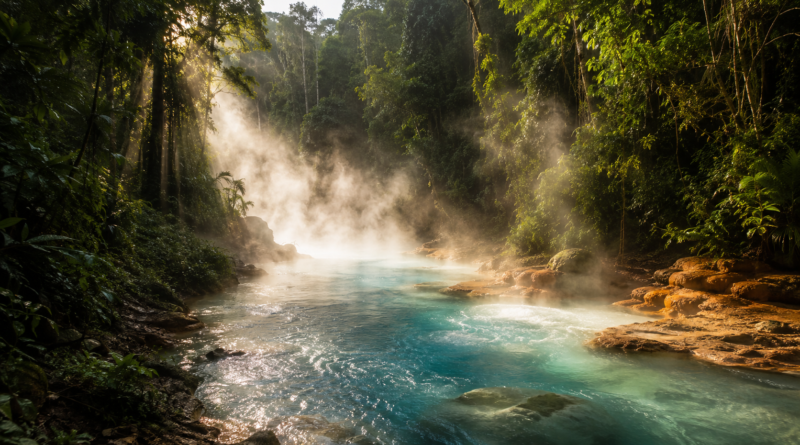
The Boiling River of the Amazon: The Mystery of Shanay-Timpishka
Deep in the Peruvian Amazon, a river runs so hot that parts of it can reach about 94°C. For generations, people knew about it. But when a geoscientist heard the legend, he was told the river could not possibly exist. Then he went looking for it.
There are stories that sound too strange to be true.
A lost city of gold hidden somewhere in the Amazon.
A giant serpent beneath the jungle.
And, buried inside those legends, a river so hot that its water could kill anything unfortunate enough to fall into it.
For years, geoscientist Andrés Ruzo heard the story of that river.
He didn’t believe it. Not completely. But he couldn’t forget it either.
The problem was simple. If such a river really existed, where was it?
And perhaps more importantly: what could possibly make a river in the middle of the Amazon rainforest this hot?
A Legend Hidden in the Jungle
Ruzo first heard about the mysterious river as a child growing up in Peru.
His grandfather told stories connected to Paititi, the legendary lost city sometimes associated with the Amazon and the old tales of El Dorado.
Some parts of those stories sounded like pure mythology. But other details turned out to have real-world counterparts.
There really were enormous anacondas. There really were spiders capable of killing surprisingly large prey.
So Ruzo eventually began wondering about the strangest detail of all: what about the boiling river?
Years later, while studying geology and researching Peru’s geothermal systems, he had a reason to take the question seriously.
He was looking at maps showing hot springs throughout Peru. And something bothered him.
If geothermal activity existed in parts of the Amazon, could a much larger thermal river exist there too?
He started asking other geologists, companies and researchers. The answer kept coming back: no.
As far as the scientific record showed, there was no huge thermal river in the Amazon. There was another problem. There was no active volcano nearby to provide the obvious source of such extreme heat.
So Ruzo nearly gave up. Then he went to a family dinner. And everything changed.
“The River Is Real.”
During that dinner, Ruzo mentioned his search to his aunt.
Her response was almost unbelievable. She told him that the river wasn’t a myth. She had actually been there. And so had his uncle.
Suddenly, the question wasn’t: “Could a river like this exist?” It was: “Where is it?”
Ruzo eventually received permission to travel to the remote site.
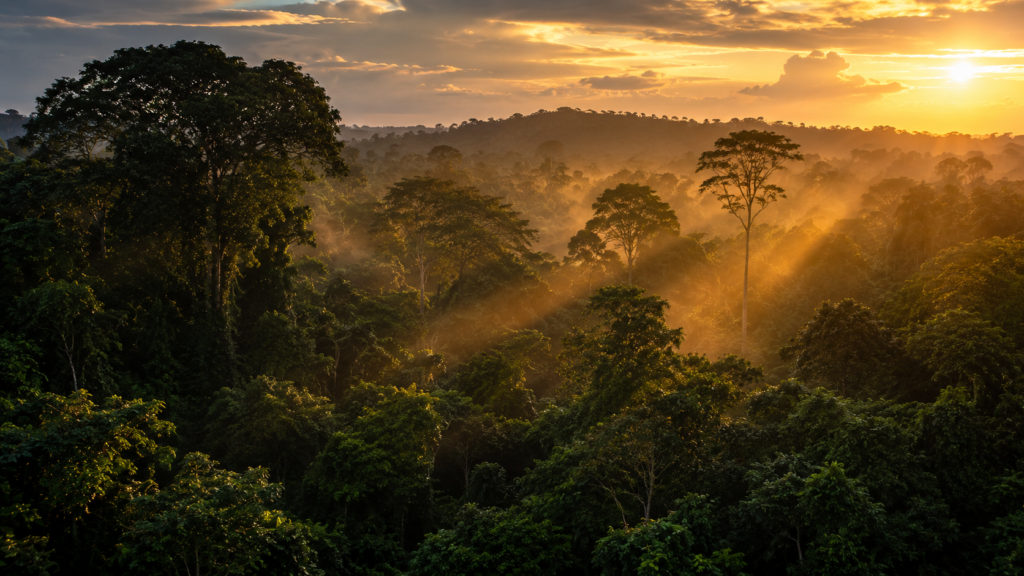
The journey involved roads, a canoe and a trek through dense rainforest. Then the jungle began to change.
The air became warmer. Mist appeared. And eventually, through the vegetation, something extraordinary came into view.
The legendary river was real.
It wasn’t a tiny hot spring. It was a flowing river system stretching for kilometers through the rainforest. And when Ruzo measured the water, the thermometer confirmed what the legend had promised. This was no ordinary river.
The Water Was Hot Enough to Be Dangerous
Calling it the “Boiling River” is dramatic. But the reality is dramatic enough.
The hottest measurements reported from the river reach approximately 94°C (201°F).
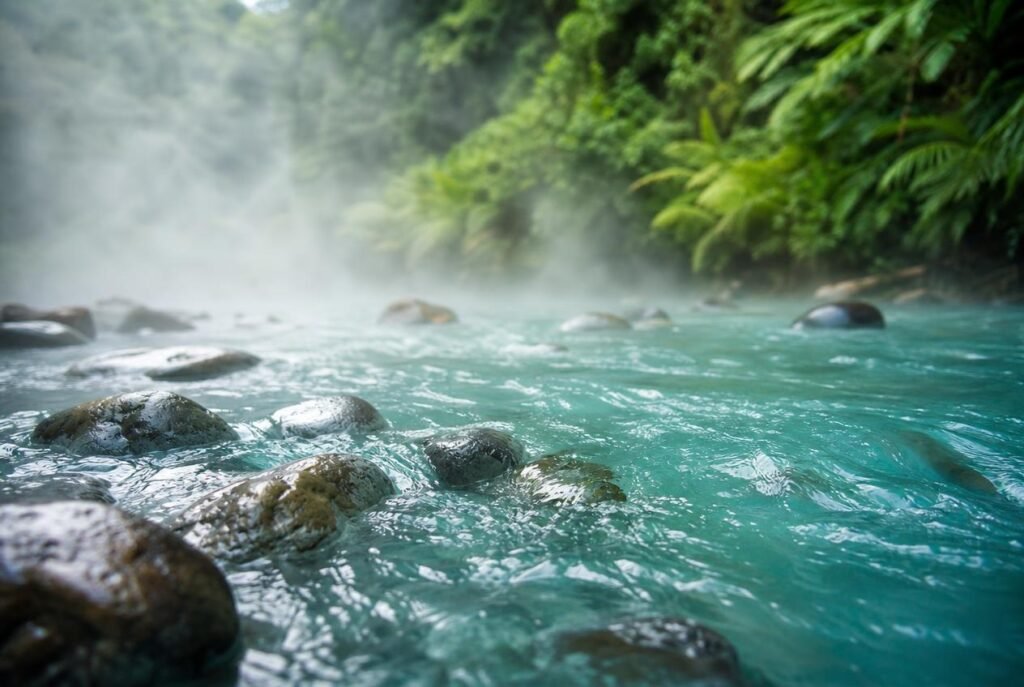
That’s below the standard boiling point of water at sea level, but it is still extraordinarily hot. Hot enough to cause severe burns. Hot enough to make falling into the wrong section potentially fatal. And hot enough that steam can rise from the surface as the river moves through the jungle.
The remarkable part is that the river isn’t equally hot everywhere. Its temperature changes along its course.
Cooler water enters the system. Hot geothermal water joins it. And the result is a natural river whose temperature can vary dramatically from one section to another.
In its hottest stretches, the river becomes less like an ordinary waterway and more like a moving geothermal system.
But Where Does the Heat Come From?
This was the real scientific mystery.
A volcano would have provided an obvious explanation. But the Boiling River is located hundreds of kilometers from the nearest active volcanic center. So something else had to be heating the water.
The leading explanation involves Earth’s geothermal heat.
Rainwater can seep deep into the ground. As it travels downward, it encounters increasingly hot rocks. Eventually, that heated water can move back toward the surface through fractures and faults in Earth’s crust.
When those hot waters emerge and mix with cooler surface water, they can create extraordinary thermal features.
Researchers studying the Boiling River have described the system in terms of deep geological pathways—essentially a natural plumbing network through which water moves down, heats up and returns toward the surface.
Think of Earth as having an enormous underground plumbing system. The pipes aren’t made of metal. They’re made of rock, fractures and faults. And instead of a boiler in a basement, the heat source is the planet itself.
A River Without a Volcano
This is what makes the Boiling River particularly fascinating.
People often associate extremely hot water with volcanoes. But geothermal heat doesn’t always require a volcano sitting directly beneath the landscape.
Earth’s interior is already hot. The real challenge is finding a pathway that allows that heat to reach the surface.
At the Boiling River, the geological structure appears to provide exactly that. Hot water rises through deep pathways and enters the river system.
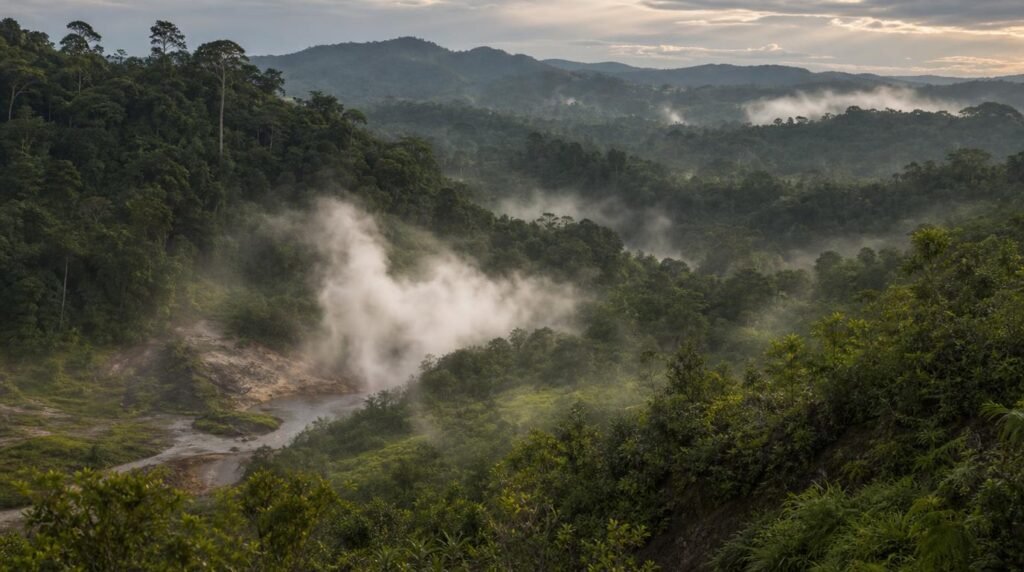
The result is something that sounds impossible when described in a single sentence: a hot river flowing through one of the world’s largest tropical rainforests, hundreds of kilometers from an active volcanic center.
The River Wasn’t Really “Discovered”
There’s an important part of this story that shouldn’t be forgotten.
Ruzo didn’t discover the river in the sense that nobody knew it existed. Local communities already knew it.
The river had cultural and spiritual importance long before scientists arrived with thermometers and geological equipment.
The area around the river is associated with Indigenous communities and traditions that treat the site as a place of unusual spiritual significance.
For local people, the river wasn’t waiting to be “discovered.” It was already part of their world.
What Ruzo helped bring to the wider scientific community was something different: scientific documentation and investigation of a remarkable natural system that had long been known locally.
That distinction matters. Sometimes modern science doesn’t discover a place. Sometimes it finally listens to the people who already know it exists.
A Sacred River Under Pressure
The Boiling River is not simply a scientific curiosity.
The surrounding rainforest has faced human pressures including logging and land clearing. That makes the river’s story about more than geology. It is also a story about conservation.
The community living around the river has played a role in protecting the area, while researchers have worked to understand its geology, ecology and cultural significance.
The Boiling River Project, founded by Ruzo, focuses on research, conservation and efforts to support the protection of this unusual environment.
And that gives the river a second mystery.
The first question was: why is it so hot? The next question is: can this extraordinary ecosystem be protected?
The River Became a Natural Laboratory
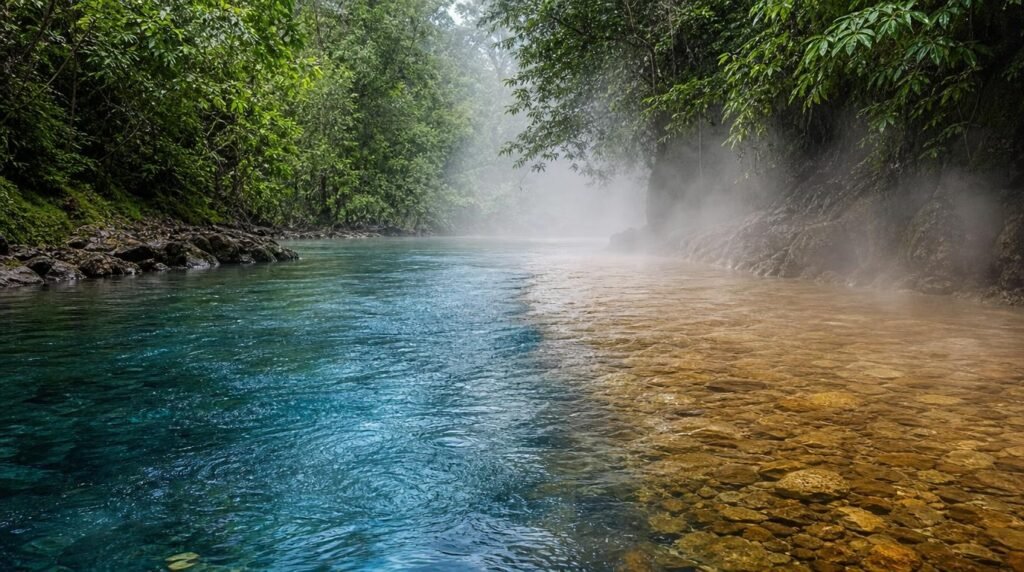
The story gets even more interesting when scientists stop looking only at the water. Because along the river, nature has created something rare: a natural temperature gradient.
Some areas are relatively cool. Others are dramatically hotter. That means researchers can study how living organisms respond to different thermal conditions across the same broader rainforest environment.
And this matters far beyond one mysterious river.
Tropical forests are extremely sensitive to temperature. Recent research has shown that even relatively small changes in the temperatures experienced beneath tropical forest canopies are already producing increasingly unusual thermal conditions across many parts of the tropics.
The Boiling River offers scientists a very different way to study this question. Instead of waiting decades for a forest to warm naturally, researchers can examine an existing landscape where temperature changes dramatically over relatively short distances.
The river is therefore more than a curiosity. It is a living experiment created by Earth itself.
What Happens When a Forest Gets Hotter?
This is one of the most important scientific questions the river may help illuminate.
Plants are not infinitely tolerant of heat. Neither are animals, fungi or microorganisms. Every species has environmental limits.
As temperatures rise, some organisms may struggle while others gain an advantage. That can change which species survive, where they grow and how ecosystems function.
Research around the Boiling River has therefore helped turn an extraordinary natural feature into an opportunity for ecological research.
The river isn’t simply telling us: “Look how hot I am.” It’s also asking: “What happens to life when the temperature changes?”
A Mystery That Isn’t Finished
It would be tempting to end the story here. The legend was true. Scientists found the river. They measured the heat. They developed a geological explanation. Mystery solved.
Except science rarely works that neatly.
The broad geothermal explanation makes sense. But understanding exactly how water travels through the underground system—and how the different geological structures contribute to the river’s remarkable temperatures—is a much more complicated problem.
That’s part of what makes the Boiling River so fascinating. We know enough to understand why it can be hot. But there is still more to learn about the hidden system beneath the rainforest.
And that’s exactly where good science begins. Not with: “We know everything.” But with: “We know this much. What happens next?”
The Amazon Is Hiding More Than Life
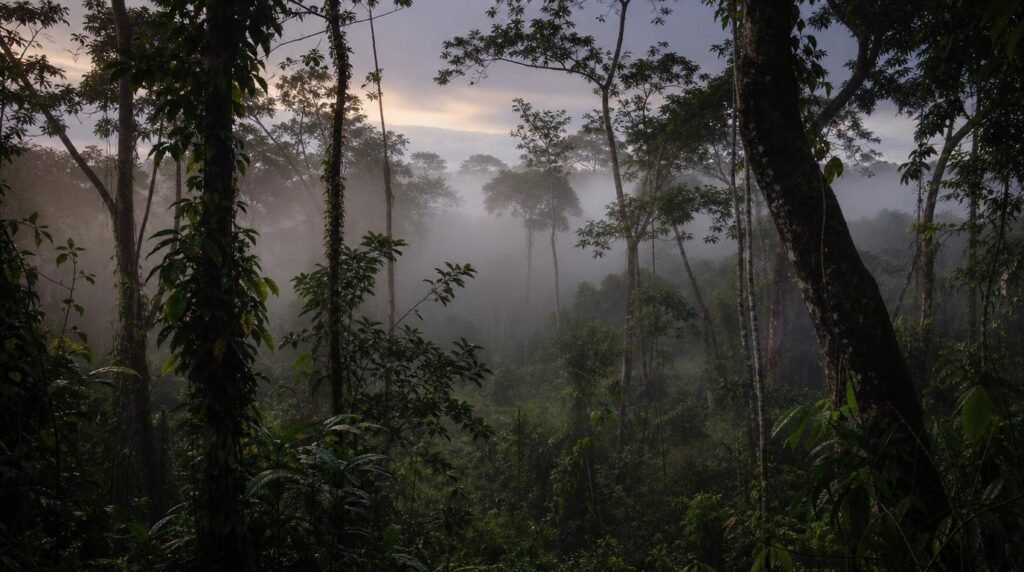
When most people imagine the Amazon rainforest, they think about biodiversity. Jaguar. Anaconda. Toucan. Giant trees. Endless green.
But underneath all that life is another world.
Water moves through rock. Heat rises from Earth’s interior. Faults cut through the crust. Hot springs emerge. And geological processes that began far beneath our feet shape what happens on the surface.
The Boiling River is a reminder that the Amazon isn’t just biologically extraordinary. It is geologically extraordinary too.
The River That Turned a Legend Into Science
The story began with something that sounded impossible. A river hidden in the Amazon. Water hot enough to kill. A place protected by ancient stories and local knowledge. A young geoscientist who couldn’t stop wondering whether the legend might be true.
Then came the journey into the jungle. The thermometer. The steam. The realization.
The river existed.
But perhaps the most remarkable part of the story isn’t that a river this hot exists. It’s that the river connects several worlds at once.
Legend and science. Earth and life. Ancient knowledge and modern research.
And beneath all of them is the same invisible force: the heat of our planet.
The Oddnova Takeaway
There are still places on Earth that sound impossible.
Not on another planet. Not in some distant galaxy. Here. On our own world.
The Boiling River reminds us that the Earth beneath our feet is anything but quiet.
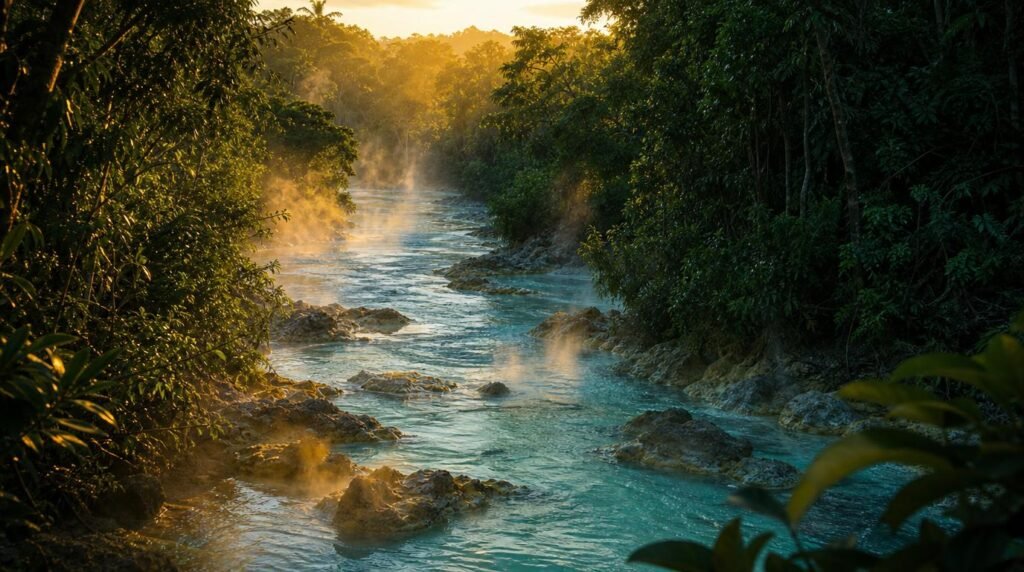
Water disappears into the ground. Heat transforms it. Rock guides it back toward the surface. And somewhere in the Amazon, that hidden journey creates a river unlike almost anything else on Earth.
For generations, people knew it was there. Science simply had to catch up.
Because sometimes the strangest mysteries aren’t waiting to be invented.
They’re already flowing through the jungle.
Sources & Further Reading
- National Geographic — research and exploration of the Boiling River and Andrés Ruzo.
- National Geographic — temperature measurements and geological explanations of the river.
- National Geographic Live — background on the Boiling River Project and its scientific significance.
- Nature Climate Change — research on changing temperatures beneath tropical forest canopies.
Read Also →
📖 The Lake That Killed a Village Without Warning
📖 The Planet Where It Rains Glass Sideways: The Most Extreme World Ever Discovered