

7 Natural Phenomena So Extreme They Seem Impossible
Nature doesn’t need special effects. Long before any film studio figured out how to fake a river on fire or a lake the color of candy, the planet was already doing it for real — quietly, patiently, in places most people will never visit. No myths required. No exaggeration needed. Just physics, chemistry, and time, pushed to their most extreme edges.
Here are seven places on Earth that look like they shouldn’t exist — and yet do.
1. Blood Falls, Antarctica
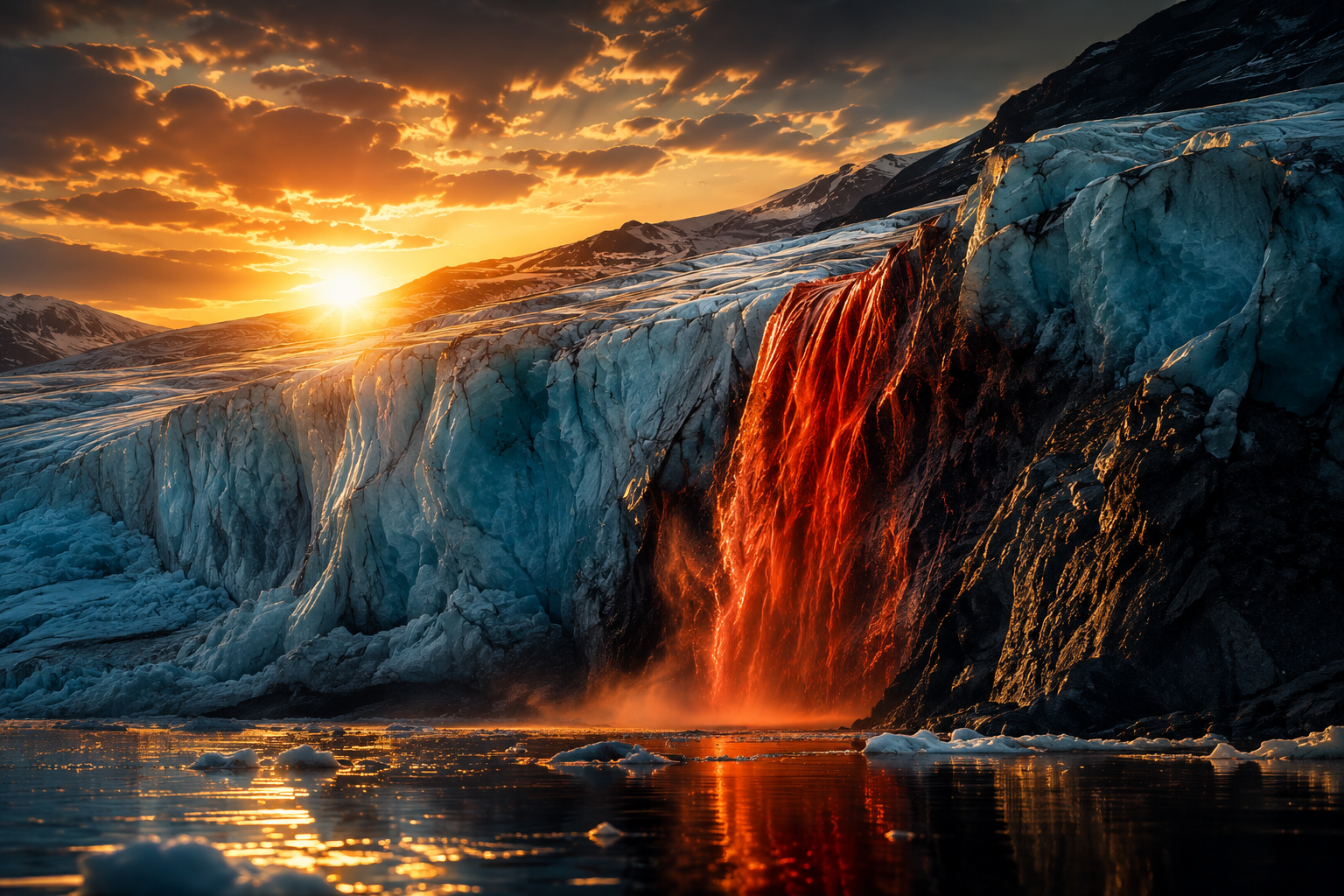
At the edge of Taylor Glacier in Antarctica, a waterfall the color of rust and blood pours slowly out of solid ice, staining the white glacier in long crimson streaks. For decades after its discovery in 1911, scientists genuinely debated whether algae was responsible for the color, since nothing about a bleeding glacier in one of the coldest places on Earth made intuitive sense.
The real answer turned out to be almost as strange as the myths. Trapped beneath the glacier is an ancient lake, sealed off from sunlight and oxygen for over a million years, rich with iron. When that iron-heavy water finally reaches the surface and touches air, it rusts almost instantly — turning bright red the moment it’s exposed, like blood meeting oxygen. Buried inside that lake, researchers later discovered something even more remarkable: microbial life that has survived in total darkness for over a million years, one of the closest things on Earth to a glimpse of what life might look like on a frozen alien moon.
2. The Door to Hell
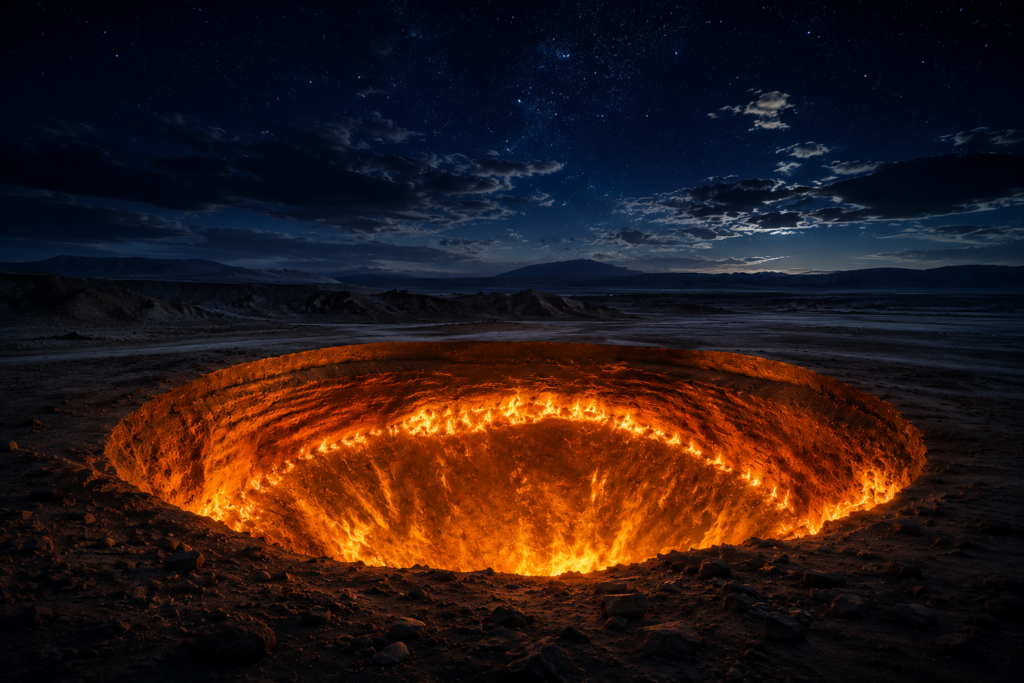
In the middle of the Karakum Desert in Turkmenistan, a crater roughly 230 feet wide has been burning continuously since 1971 — longer than most people reading this have been alive. Locals call it the Door to Hell, and at night, the glow is visible for miles across the flat, empty desert.
The story behind it involves a Soviet drilling operation that collapsed into an underground natural gas cavern. To prevent the site from releasing dangerous gas into nearby villages, engineers made a decision that seemed reasonable at the time: light it on fire, expecting the gas to burn off within a few weeks. Instead, the fire kept feeding itself for over fifty years and counting. In 2022, Turkmenistan’s president ordered scientists to find a way to finally extinguish it, citing health and environmental concerns — yet as of the most recent reports, the fire is still burning, refusing to go quietly.
3. The Boiling River of the Amazon
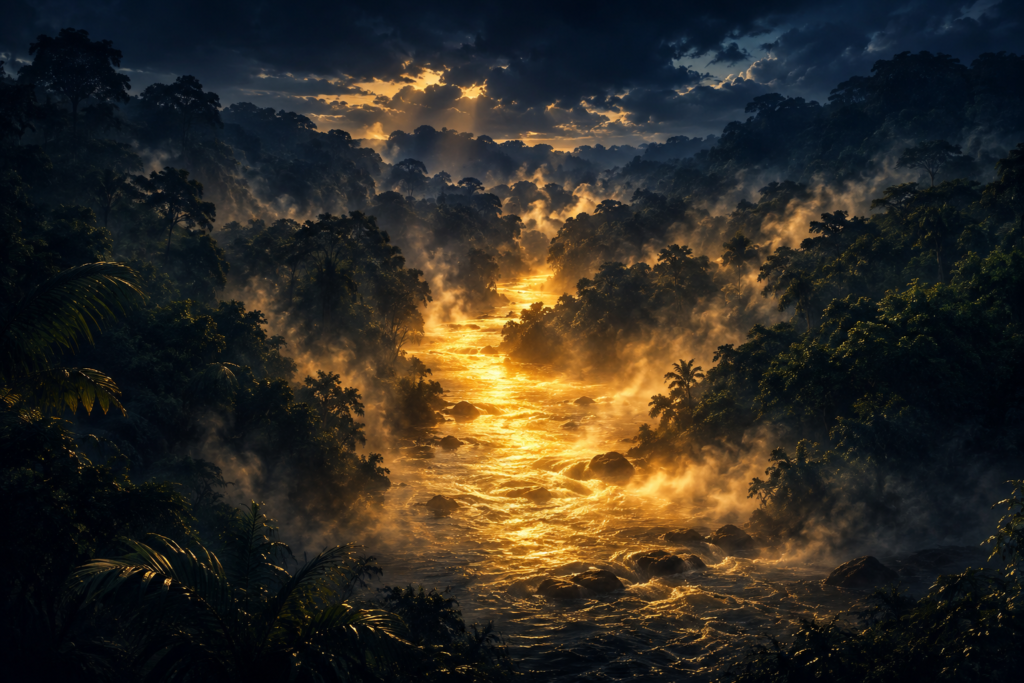
Deep in the Peruvian Amazon, far from any volcano, flows a river that can reach temperatures close to boiling — hot enough that small animals falling in are cooked almost instantly. Local legend had spoken of it for generations, but it took a geoscientist named Andrés Ruzo, guided by his grandmother’s stories, to formally document it for the scientific world.
What makes it genuinely puzzling is the lack of an obvious heat source. The river isn’t near active volcanic activity the way most geothermal hot springs are. The leading explanation involves geothermally heated water traveling up through a fault system deep underground, but the exact mechanics of why this particular river runs hot for over four miles, in the middle of dense, humid jungle, is still being studied. For now, it remains one of the only rivers on Earth you genuinely cannot swim in.
4. Catatumbo Lightning
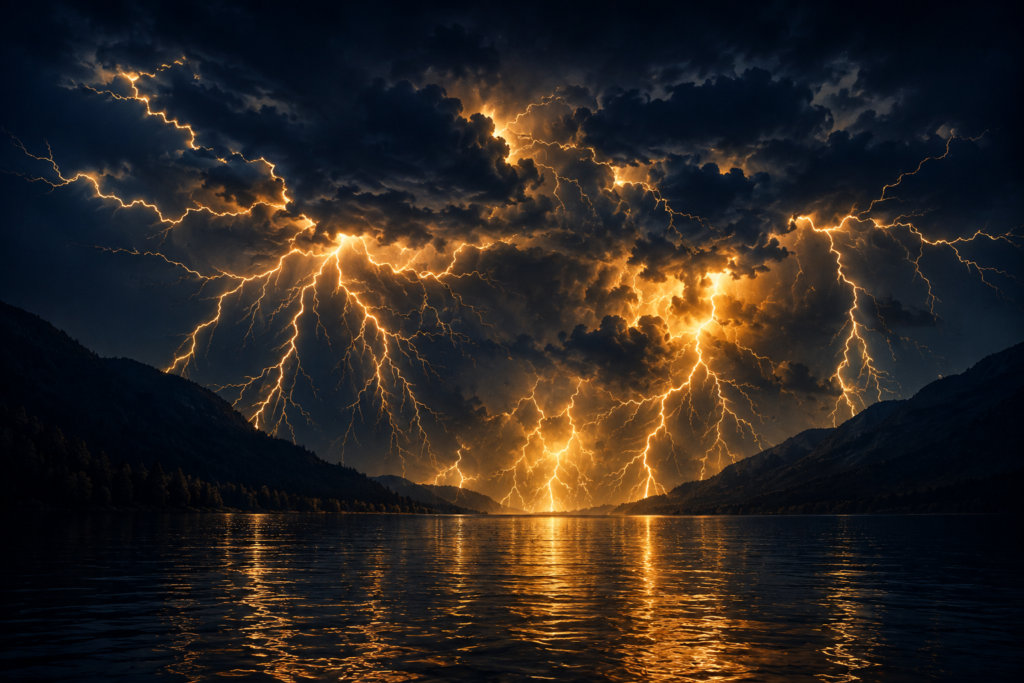
Over the mouth of the Catatumbo River in Venezuela, where it meets Lake Maracaibo, the sky performs a storm that never seems to fully stop. Lightning strikes here for up to 260 nights a year, sometimes flashing nearly 30 times a minute, for hours at a stretch — making it, by some measurements, the most electrically active place on the planet.
Meteorologists point to a rare combination of factors: warm Caribbean winds colliding with cool air flowing down from the Andes mountains, funneled directly over the lake’s warm waters, creating near-constant instability in the atmosphere. Sailors historically used the distant flashes as a natural lighthouse, visible from far out at sea long before modern navigation existed. It’s a storm so consistent that it has its own name, its own tourism industry, and its own place in Guinness World Records — nature repeating the same electric performance, almost every single night.
5. The Great Blue Hole
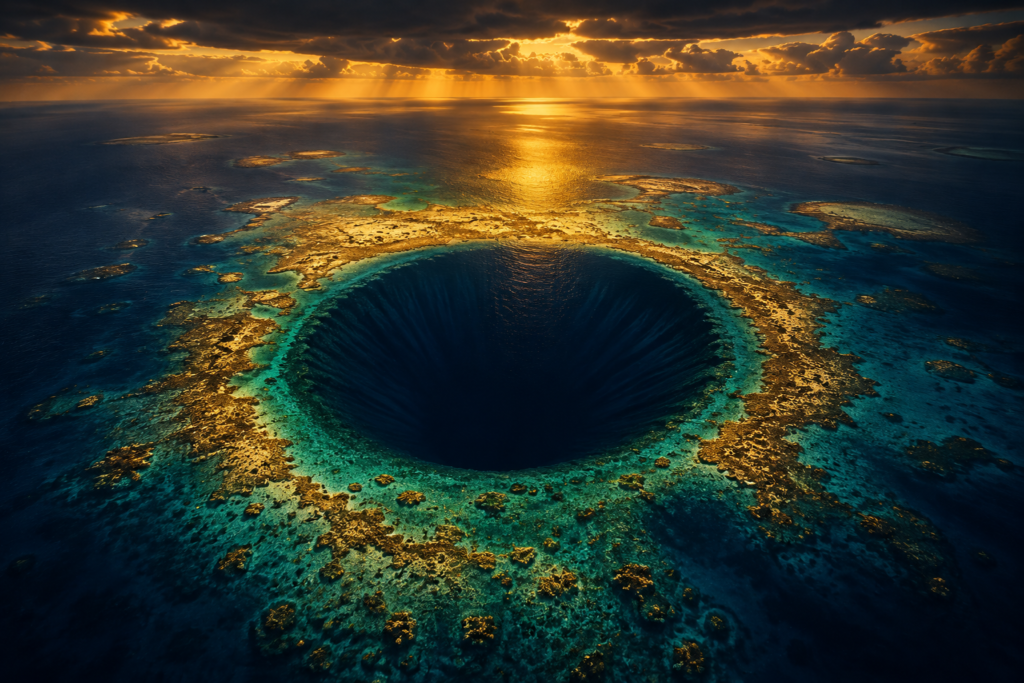
Off the coast of Belize, in the middle of a shallow turquoise reef, the ocean suddenly drops into a nearly perfect circle of deep blue, over 300 feet deep and 1,000 feet across. Seen from above, it looks almost artificial — too round, too symmetrical to be an accident of nature.
It isn’t artificial, but it is a fossil of sorts. During past ice ages, when sea levels were far lower, this was a dry limestone cave system, slowly carved out over tens of thousands of years. As the ice melted and the ocean rose, the cave’s ceiling eventually collapsed, and the rising sea swallowed what was left, creating the massive sinkhole divers explore today. Expeditions into its depths have found ancient stalactites, once formed in open air, now sitting silently at the bottom of the sea — a cave that used to breathe wind, now breathing water instead.
6. Spotted Lake
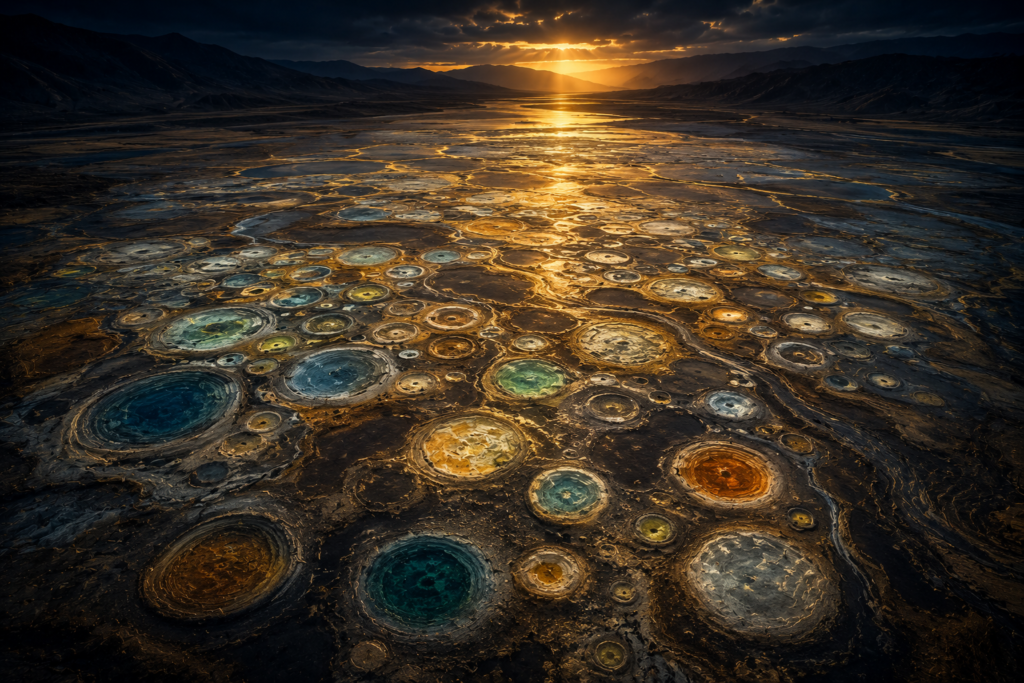
In British Columbia, Canada, a small lake transforms almost completely during the summer heat. As the water evaporates, hundreds of mineral-rich pools are left behind on the lakebed, each one a different shade — yellow, green, blue — creating a landscape that looks more like a painter’s palette than a natural body of water.
The colors come from an unusually high concentration of minerals, including magnesium sulfate, calcium, and sodium sulfates, which crystallize differently depending on their exact composition as the water dries. The Syilx Okanagan people have long considered the lake sacred, using its mineral-rich mud for healing for generations before it ever appeared on a tourist map. Today, much of the lake is protected and fenced off, a rare case of a natural wonder that requires real restraint to preserve — precisely because it looks so much like something people want to touch.
7. The Sailing Stones of Death Valley
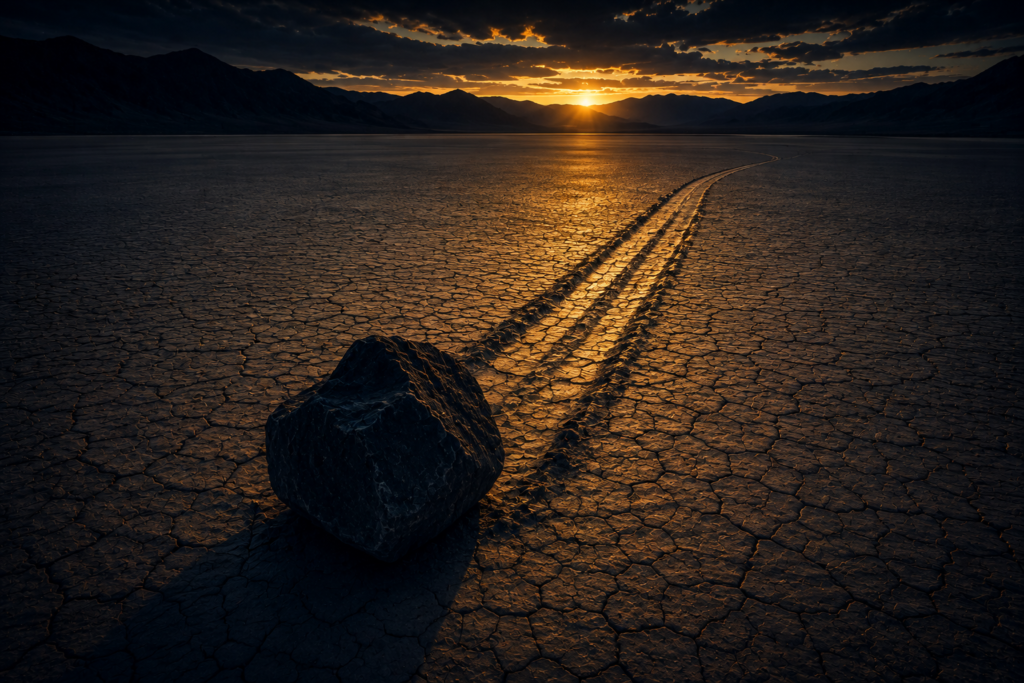
Across a dry, cracked lakebed in Death Valley, California, large rocks — some weighing hundreds of pounds — leave long trails behind them, as if they had crawled across the desert floor entirely on their own. No footprints. No tire tracks. Just a rock, and a line stretching sometimes hundreds of feet behind it.
For decades, this genuinely stumped scientists, spawning theories involving strong winds, magnetic fields, even alien involvement. The real answer, confirmed only in 2014 using time-lapse cameras and GPS-tagged rocks, turned out to be a rare, precise combination of conditions: a thin layer of ice forms overnight after occasional rain, and as it begins to melt in the sun, large sheets of ice — pushed gently by wind — carry the rocks along on a nearly frictionless surface, leaving a trail as the ice thins beneath them. It only happens under narrow, specific weather conditions, which is exactly why it took so long for anyone to catch it in the act.
Final Thoughts
None of these places required imagination to become extraordinary. A glacier that bleeds, a fire that won’t stop, a river too hot to touch, a storm that never quite ends, a hole shaped like a fossil, a lake that paints itself, stones that appear to walk — every one of them is the result of ordinary physical processes, pushed just far enough to look impossible.
Maybe that’s the real lesson hiding in all seven. You don’t need myth to find wonder. Sometimes you just need to look closely enough at what’s already there.
Read Also →
📖 Top 10 Ancient Mysteries That Still Baffle Scientists Today
📖 35 Deep Sea Creatures That Look Like Alien Monsters
📖 7 Unexplained Mysteries That Continue to Puzzle Experts Today