

The Lake That Killed a Village Without Warning
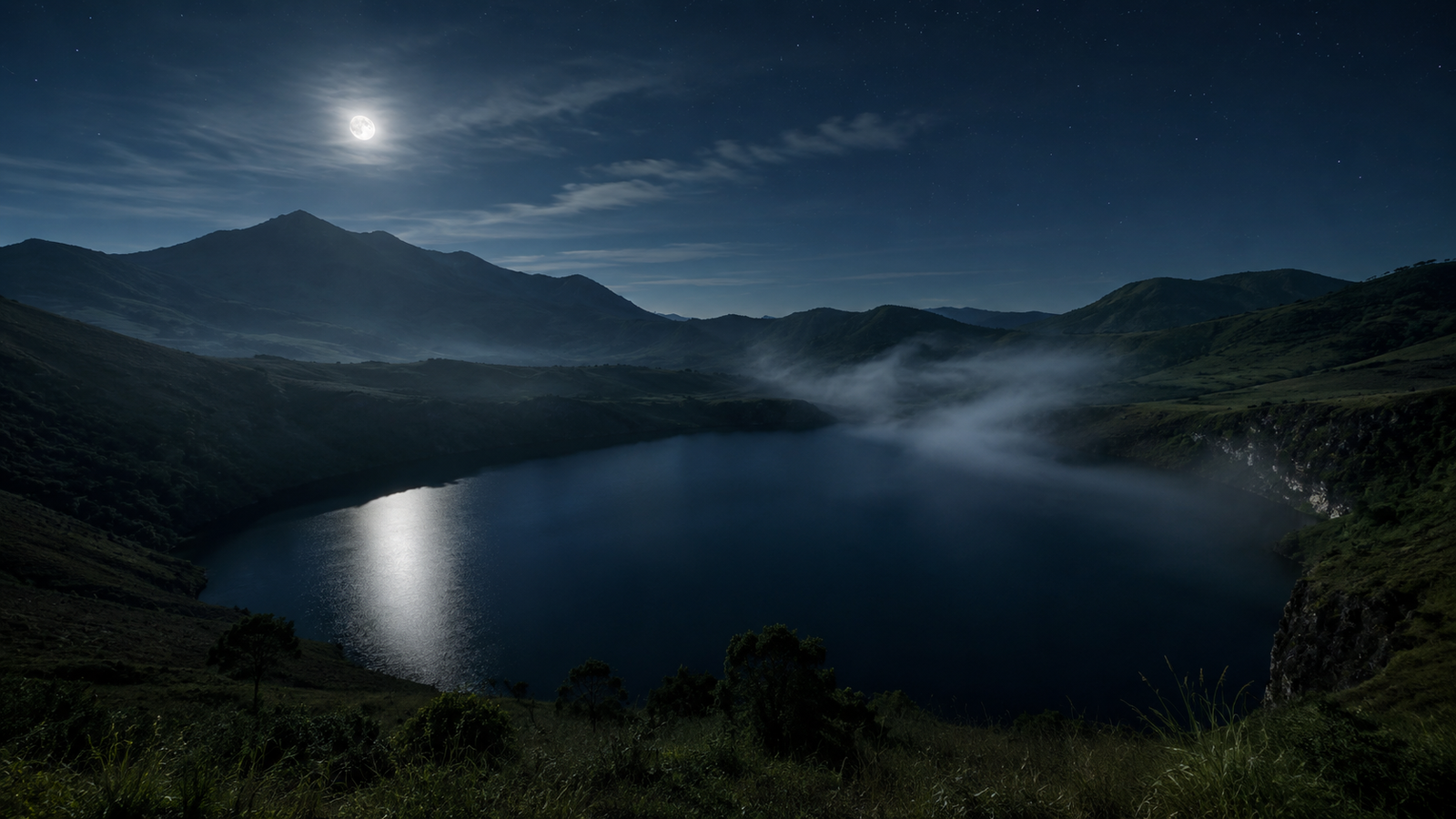
At first, there was nothing unusual about the night.
The people living around Lake Nyos in northwestern Cameroon were asleep. The lake itself looked exactly as it always had—dark, still, and silent beneath the night sky.
There was no earthquake.
No volcanic eruption.
No violent storm.
No warning that something terrible was about to happen.
Then, during the night of August 21, 1986, the lake released an invisible force so powerful that by morning, more than 1,700 people were dead.
And the strangest part?
Many of them never knew what was coming.
The Lake That Looked Harmless
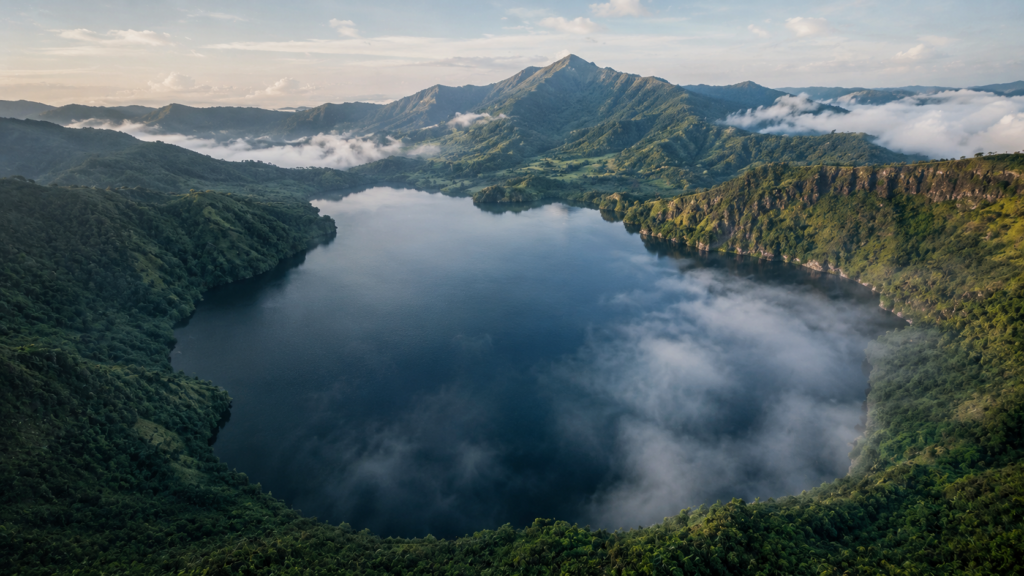
Lake Nyos sits inside a volcanic region of Cameroon, surrounded by green hills and small communities.
From the surface, there was little reason to fear it.
It was simply a deep, peaceful lake.
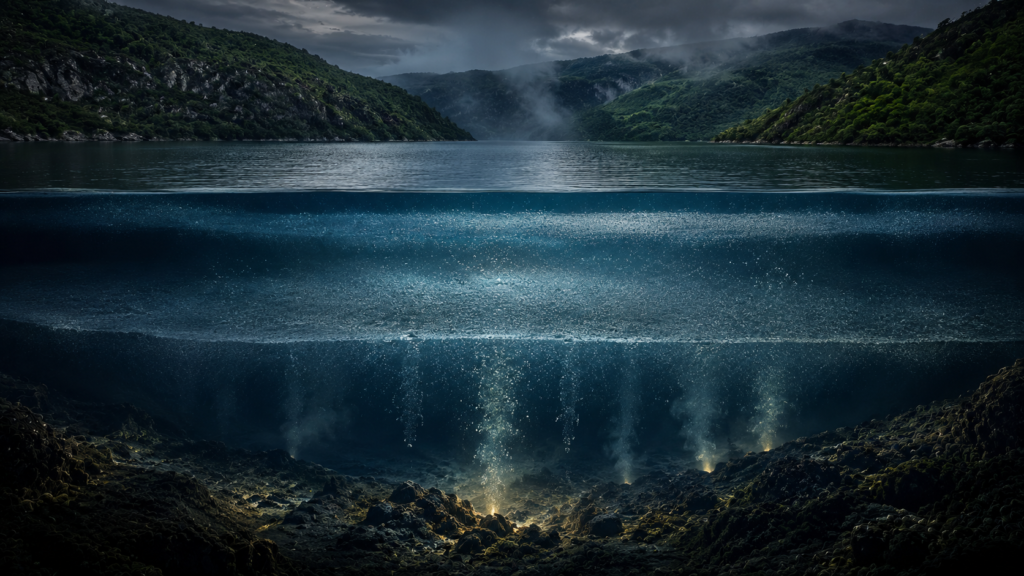
But far beneath its calm surface, the Earth had been quietly filling it with something deadly.
Deep underground, volcanic activity naturally produces carbon dioxide. The gas can travel upward through cracks in the Earth’s crust and dissolve into groundwater.
At Lake Nyos, that process had been happening for generations.
Because the lake is exceptionally deep, its lower water remained largely isolated from the water above. This allowed enormous quantities of carbon dioxide to accumulate in the depths.
Year after year, the gas built up.
The people living nearby couldn’t see it.
They couldn’t smell it.
And they had no idea that the beautiful lake beside their homes was becoming a gigantic natural reservoir of invisible gas.
Then, one night, the balance was broken.
The Night Everything Changed
Sometime during the night, a disturbance caused deep, carbon-dioxide-rich water to rise rapidly toward the surface.
As the water rose, the pressure around the dissolved gas decreased.
And that triggered something extraordinary.
The carbon dioxide began escaping from the water in huge quantities.
Imagine opening a bottle of carbonated soda.
While the bottle is sealed, pressure keeps much of the carbon dioxide dissolved in the liquid. Open it, and the pressure suddenly drops. Bubbles rush toward the surface.
Now imagine that happening inside an enormous lake.
Instead of a few bubbles, Lake Nyos released a massive amount of gas.
The carbon dioxide surged upward and spilled into the atmosphere.
But there was another problem.
Carbon dioxide is denser than ordinary air.
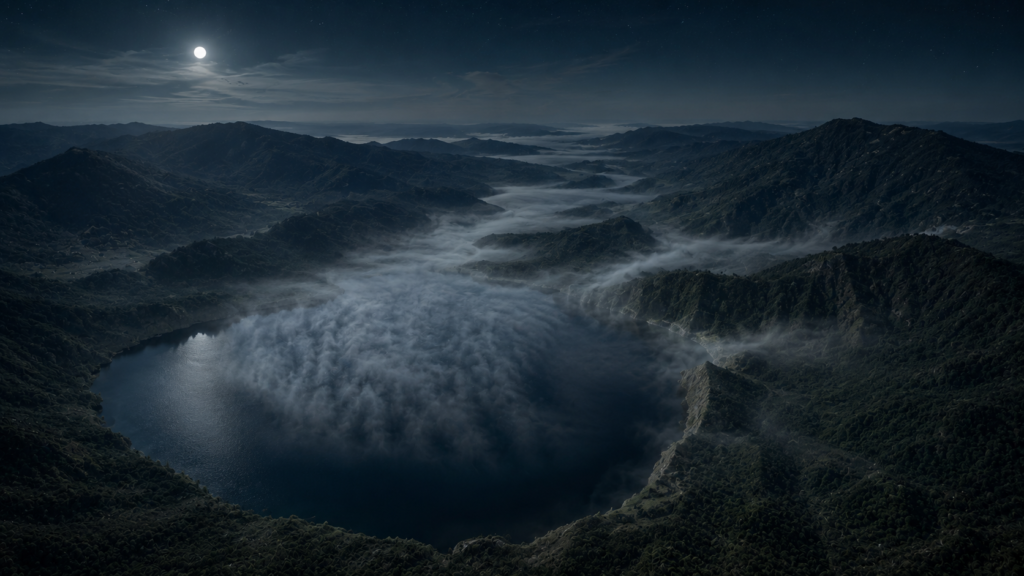
Instead of quickly dispersing upward, the gas cloud moved outward and downhill through the surrounding valleys.
And people were sleeping directly in its path.
There was no fire.
No explosion.
No terrifying roar.
Just an invisible cloud moving silently through the darkness.
When the Invisible Became Deadly
Carbon dioxide is not normally a dangerous gas.
We produce it naturally every time we breathe.
But at extremely high concentrations, it can displace oxygen from the air.
A person surrounded by a dense concentration of carbon dioxide can lose consciousness and eventually suffocate.
That appears to be what happened around Lake Nyos.
The gas moved through nearby communities while people slept.
People collapsed where they stood.
Families were found dead inside their homes.
Thousands of livestock died.
Birds fell from the sky.
And when survivors emerged in the morning, they encountered a scene that seemed impossible.
The houses were still standing.
The trees were still standing.
The lake was still there.
There had been no obvious destruction.
Yet more than 1,700 people had lost their lives.
It was as though something invisible had passed through the valleys during the night and simply taken the breath from everything in its path.
What Had Actually Happened?
At first, the disaster was difficult to explain.
There had been no major volcanic eruption.
No massive earthquake.
No obvious chemical spill.
So what had killed so many people almost simultaneously?
Scientists began investigating the lake.
Their findings revealed something extraordinary.
The deep water contained enormous concentrations of dissolved carbon dioxide.
The deeper they went, the more evidence they found that the lake had been storing volcanic gas for a very long time.
The tragedy had not been caused by a conventional explosion.
It was something much rarer.
Scientists called the phenomenon a limnic eruption—a sudden release of dissolved gas from the depths of a lake.
Lake Nyos had essentially released its hidden carbon dioxide reservoir into the surrounding landscape.
And the discovery raised an even more frightening question.
Could it happen again?
The Lake Was Still Dangerous
The answer was yes.
After the disaster, scientists realized that huge quantities of carbon dioxide remained trapped deep beneath the lake.
If another disturbance triggered a sudden release, another disaster could occur.
Something had to be done.
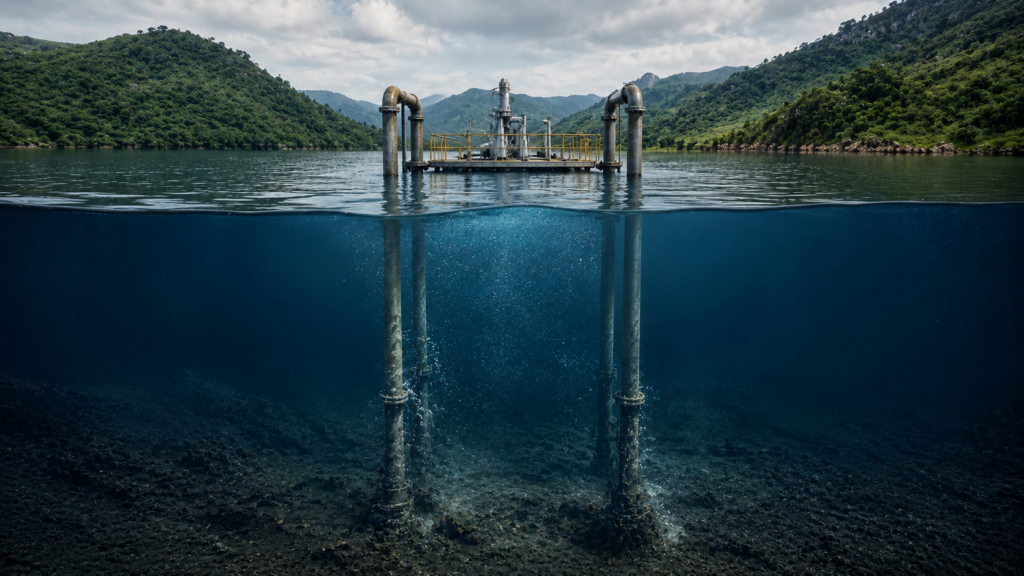
Scientists eventually developed a method called controlled degassing.
They installed pipes reaching deep into the lake.
The purpose was simple: bring carbon-dioxide-rich water gradually toward the surface.
As the water rose and pressure decreased, the dissolved gas could escape in a controlled way instead of accumulating until another massive release occurred.
It was an unusual solution to an unusual problem.
The lake itself couldn’t simply be emptied.
Instead, scientists had to carefully release the invisible threat that had been building inside it.
And Lake Nyos Wasn’t the Only Warning
Lake Nyos wasn’t the first lake in Cameroon to produce a deadly gas release.
Just two years earlier, in 1984, Lake Monoun—another volcanic lake in the same country—experienced a similar event that killed dozens of people.
The two disasters helped scientists recognize a rare but potentially catastrophic natural phenomenon.
Certain deep volcanic lakes can accumulate enormous quantities of dissolved gases.
Under particular conditions, those gases can suddenly escape.
The result can be devastating.
But the most disturbing part isn’t necessarily the power of the phenomenon.
It’s how difficult it can be to see coming.
The Most Terrifying Disasters Can Be Invisible
A hurricane gives you wind.
An earthquake shakes the ground.
A volcanic eruption can fill the sky with ash.
A tsunami rises like a wall of water.
Nature often gives us something to see.
Lake Nyos offered almost nothing.
No warning siren.
No dramatic cloud.
No obvious smell.
No burning sensation.
Just a gas that moved silently through the landscape.
That is what makes the story so unsettling.
The lake wasn’t raging.
It wasn’t boiling.
It wasn’t glowing.
It looked peaceful.
Beautiful, even.
And beneath that peaceful surface, the Earth had been slowly loading it with carbon dioxide for generations.
A Lake That Changed Science
The tragedy of Lake Nyos changed the way scientists understood the hidden dangers that can exist inside seemingly ordinary landscapes.
A lake is not simply a body of water.
Its deepest layers can behave very differently from its surface.
Geological processes far beneath the ground can influence the water above.
And gases produced deep inside the Earth can remain trapped for years, decades, or even centuries.
The disaster also demonstrated something important about our planet:
Not every natural threat announces itself.
Some dangers build quietly.
Some remain invisible.
And some can exist right beside human communities for generations before anyone realizes they are there.
The Lake Is Still There
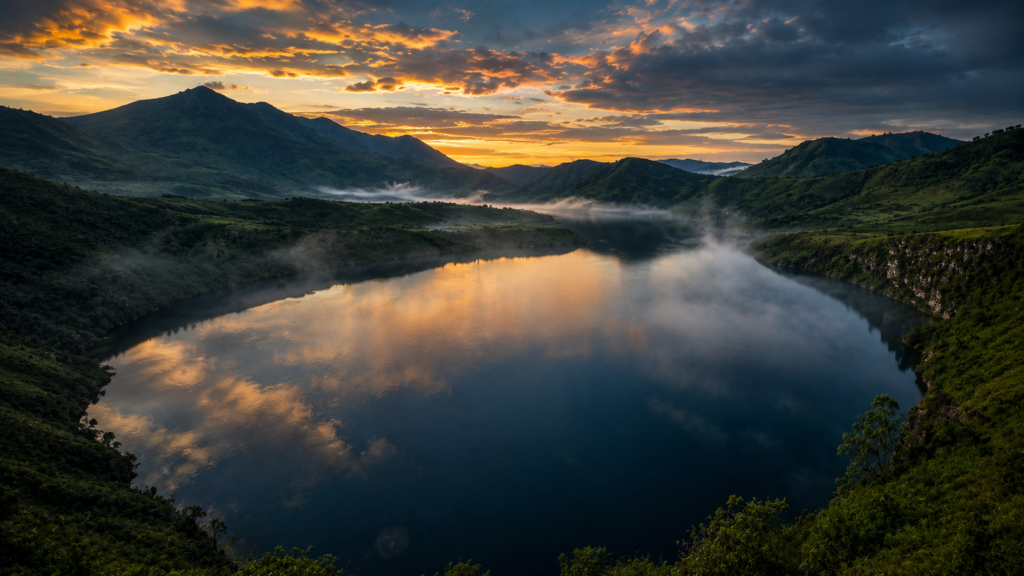
Perhaps the strangest part of the story is that Lake Nyos survived.
The lake didn’t disappear after the disaster.
The surrounding hills remained.
The water continued to reflect the sky.
And if someone visited the area without knowing its history, they might see nothing more than a peaceful lake surrounded by green landscape.
But beneath that peaceful surface lies one of nature’s most unsettling stories.
A lake that quietly accumulated an invisible gas.
A night when that gas escaped.
And a community that never saw the danger coming.
Lake Nyos reminds us that the Earth can hide extraordinary forces in ordinary places.
Sometimes nature doesn’t need fire.
It doesn’t need thunder.
It doesn’t even need to move.
Sometimes, all it needs is a silent lake, a buildup of pressure, and one night when everything suddenly changes.
Read Also →
📖 Top 10 Ancient Mysteries That Still Baffle Scientists Today
📖 35 Deep Sea Creatures That Look Like Alien Monsters
📖 The Planet Where It Rains Glass Sideways: The Most Extreme World Ever Discovered
📖 The Boiling River of the Amazon: The Mystery of Shanay-Timpishka